
The AI-Powered Warehouse: How Robotics & Tech Are Redefining Profitability
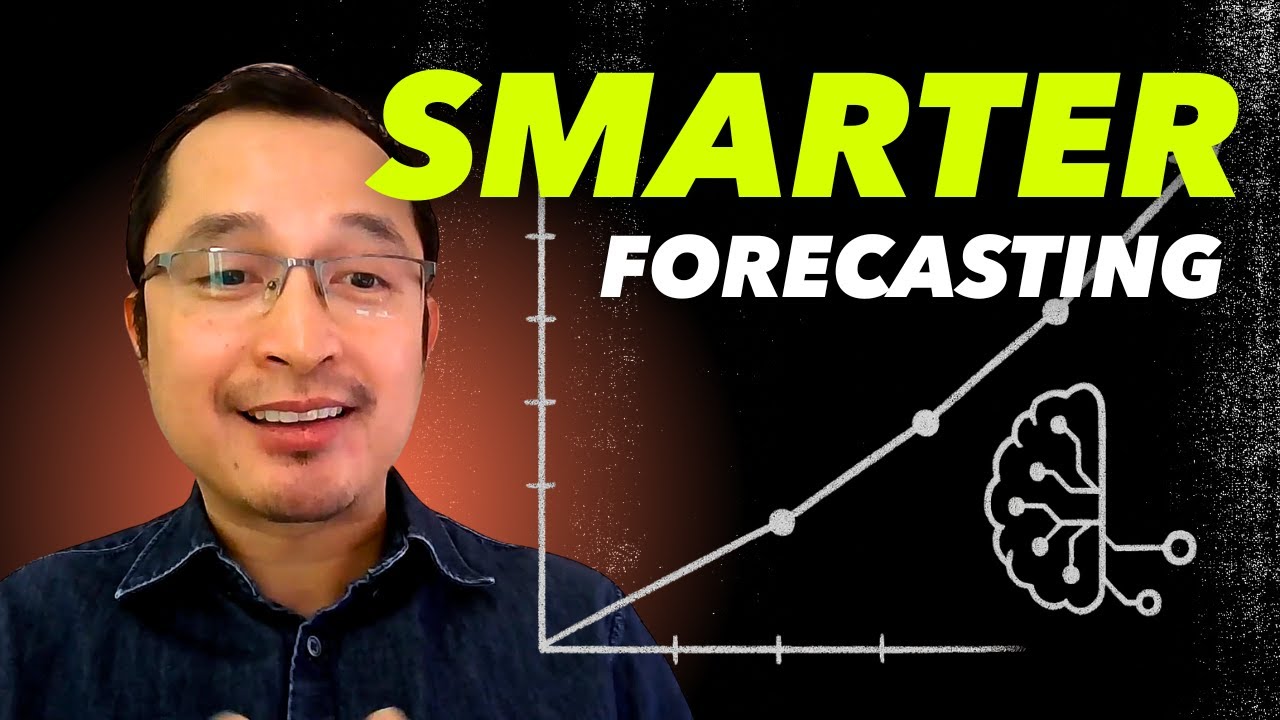
Conative AI's Mike Le and Cytronic's Kevin Gibbon join Matt's Chats to break down how AI and robotics are cutting fulfillment costs and fixing broken demand forecasting for growing ecommerce brands. Mike explains how deep learning and AI agents replace manual inventory planning, while Kevin details how robotics-powered fulfillment gets DTC shipping costs and speed closer to Amazon's.
Key takeaway
- Deep learning-based forecasting can ingest far more inputs than traditional rules-based methods. Historical stockouts, marketing signals, and demand drivers — cutting the time brands spend aggregating data for forecasting from 10–15 hours a week down to about 15 minutes.
- For a brand doing $30M in revenue with $5M in inventory, better AI-driven forecasting can free up $500,000+ in cash by reducing both overstock and safety-stock buffers, while also cutting stockout-driven lost sales.
- AI won't eliminate inventory planners, but it will eliminate the manual, hands-on portion of the job. The remaining value is in judgment, validation, and decision-making that AI can't yet take responsibility for.
- Robotics-powered fulfillment (via automated storage/retrieval systems and robotic picking) can cut per-order fulfillment cost by roughly 80% for high-SKU-count, non-fragile DTC orders — but only works at scale for a narrow set of product types and order profiles.
Chapter / Timestamps
00:00 — Introductions: Mike Le (Conative AI) and Kevin Gibbon (Cytronic)
08:40 — Mike on the marketing-inventory disconnect and why Conative AI exists
13:02 — Deep learning vs. rules-based forecasting: taking in stockouts and marketing signals as inputs
15:07 — From 10–15 hours a week to 15 minutes: agentic AI executing the forecasting task
17:48 — Kevin on Cytronic's narrow, robotics-only use case in fulfillment
20:41 — Physical AI vs. software AI: why robotics costs finally came down enough
26:43 — Mike on Conative AI's pricing and ROI ($500K+ cash freed up example)
31:35 — Kevin on Cytronic's cost structure vs. traditional 3PL benchmarks
40:26 — Will AI replace inventory planners? Mike and Kevin's 5-year predictions
44:01 — What's overhyped in supply chain AI right now
48:15 — Closing and how to connect with Mike and Kevin
Matt Hertz: Really excited to have Kevin and Mike. Kevin, I've known for about 12 years now. Mike, you and I have known each other for about five minutes here, though I've known of you for a few months. But really excited for everyone joining today's session — this month's Matt's Chats. I'm always excited for these, but this one in particular because it gives us a really good excuse to talk about AI — not because it's cliché, but because both Kevin and Mike are using AI and automation in genuinely interesting ways. Excited to dig into inventory and demand planning with Mike, and on the warehousing side, Kevin and his team at Cytronic are leaders in that space — many of you may not have heard of Cytronic yet, but I know that'll change.I'll be remiss if I don't mention that last month was the first time we had one of our 3PL premier members here at Third Person sponsor an episode. This month is the second — Kevin, CEO and founder of Cytronic, is this month's sponsor. For those unfamiliar, Cytronic is a warehousing and fulfillment company that's 80% cheaper. I'm very interested in talking to Kevin about how they can be 80% cheaper — I know they can, because I've seen the proposals and the rates myself, but I'm eager to hear how they support that. I know their business is powered by robotics, so there's probably a lot behind that.So, without further ado — Mike and Kevin, would love for you to introduce yourselves, your companies, a bit on your background, and in a couple sentences, what it is you're solving. Kevin, why don't you start, then Mike.
Kevin Gibbon: Thanks, Matt. Happy to be here and happy to support you guys at Third Person — I think you're doing a great job for both 3PLs and brands alike. I'm Kevin Gibbon, CEO and co-founder of Cytronic. We're about a year and a half, almost two years old now. Our whole thing is helping independent brands — one of their biggest pain points is the cost, speed, and reliability of fulfillment.I've been in the fulfillment industry with Matt for a while — I hired Matt at my first company, Shyp, a venture-backed consumer shipping company where we had warehouses around the US. Then I had a second company called Airhouse, basically a management marketplace for 3PLs. So I know the space very well, and I know Matt very well.With Cytronic, it wasn't robotics for the sake of being robotics — it was about understanding what brands' biggest pain points were. Running a 3PL at Shyp, and then at Airhouse working with dozens of partners as basically a 4PL layer on top of a network of warehouses — the big pain points for brands really come down to reliability and cost. A really great brand has fulfillment and shipping down to about 7% of AOV. A lot of early brands are over 20%. If you have a $100 AOV, you're spending $20 on fulfillment and shipping depending on where your inventory sits and what you're paying.Cost is a huge driver of growth — you'd much rather have customers come to your own site than go to Amazon. I'm guilty of this myself with brands I love: when I see a 7-day shipping window, it's tempting to just go buy it on Amazon instead. The robotics piece is really about the fact that costs have finally come down enough, and the technology is there, that you can actually automate enough of the 3PL process. Cytronic isn't a full 3PL — we don't do all your B2B, though we are, today, probably the best returns solution around. What I can say is we're the lowest cost for DTC shipments for smaller, non-fragile goods. Where fulfillment might run $2–3 an order elsewhere, ours is 50 cents — and we're still able to make very good margins. We're not trying to boil the ocean with robotics; it's for a specific customer, specific volume type, aiming for mid-market brands doing roughly $50M–$500M in GMV who want to accelerate their business with cheaper shipping, cheaper fulfillment, more nodes, and a delivery experience as good as Amazon's — while keeping the customer relationship themselves.
Matt Hertz: Appreciate that, Kevin. I know there are a couple 3PLs on the webinar too, so we'll definitely get into how you go from two bucks an order to 50 cents without giving away all your secrets — although, it's robotics, right, so it's hard to replicate anyway. Mike — love a little background on who you are, the business you're running, and the problems you're solving.
Mike Le: Thank you, Matt. I'm very happy to be here. I'm Mike Le, founder of Conative AI. I'm an immigrant entrepreneur — I grew up in Vietnam, came to New York in 2005, and started my first company, CB/I Digital, in 2007 — a performance marketing agency I've run for 18 years, working with a lot of ecommerce brands and enterprise clients.By working with so many ecommerce brands, I realized there's a big gap in the space without a clear solution: the disconnect between marketing and inventory creates a lot of inefficiency for brands. I've seen many fast-growth brands have to slow down because of stockout situations, and I've seen overstock burn cash for many brands — and cash flow is critical, especially for growing brands. That disconnect creates a lot of problems, and the process of inventory planning and demand forecasting is often very manual — either too simple and not accurate, or very complex with only slightly better accuracy.Today, AI can unlock a lot of value in a new way to do demand forecasting — better accuracy with the simplicity we're all looking for. At Conative AI, we use deep learning models to replace traditional forecasting methods for better accuracy and lower risk, and we leverage agentic AI to change the way brands actually do demand forecasting and inventory planning. That's the basics of what we do. I've been interested in AI since 2019, when I built my first AI team, but I got deep into it about three years ago with Conative. We've won the SaaS Award for Best Product Analytics SaaS 2024, and the AI Excellence Award for best business intelligence software in the inventory space.
Matt Hertz: That's amazing. Mike, I think this is the first webinar we've had with three immigrant founders — well, all immigrant founders on the panel.
Kevin Gibbon: Both Matt and I, our journey didn't start as far away as Vietnam — we're from up north — but it still counts.Matt Hertz: I appreciate you saying that, Mike — there's a lot of shared empathy there. Speaking of up north — Kevin, you were rooting for Canada in the Olympics, weren't you?
Kevin Gibbon: Only until they lost — then I told everybody at the office I was rooting for the US the whole time, since I'm a US citizen now.
Matt Hertz: [laughs] That's fair. I'm usually Team Canada at the Olympics myself — especially hockey, since we invented it.Mike, going back to you — I want to clarify: your ideal client is a brand, not a 3PL, correct? You're selling to ecommerce merchants directly?
Mike Le: That's a very good question. Yes — our ideal customer is brands. Our goal is to bring the advanced AI technology normally only available to enterprise clients to growing brands. We work mostly with brands doing between $10M and $100M in revenue. We also have partnerships with a lot of 3PLs, because 3PLs understand brands' inventory pain the most, and we can add value to the brand together with them — that's one strong partnership direction I've leaned into to grow Conative AI alongside our 3PL and ERP partners.The pain we're solving: many brands suffer from a bad trade-off. On one end, you have a brand — say a beauty brand — using a very simple method: average daily sales over the last 90 days, multiplied out as a baseline for the next 90 days. That runs into every kind of exogenous problem, marketing-influenced demand shifts, and stock constraints that distort the sales signal, leading to a lot of overstock and understock. It's simple, which matters for a growing brand without a large team — but it's not accurate.On the other end, I've talked to inventory planners at big brands who tell me their spreadsheet has 60,000 rows and keeps crashing — "I don't need your AI to beat me, just get rid of my pain on the spreadsheet." Very complex rule sets, sometimes 150 rules to account for every scenario. That's the pain point on that side. Conative AI's deep learning models can replace all of that complexity — you now have an AI "brain" that understands the constraints of your business and market without you having to manually specify every rule.The other key advantage of deep learning versus older forecasting methods is that it can take in far more data streams as inputs. You're not just putting in historical sales — you're putting in marketing signals, historical stockouts, market signals — giving a much broader understanding of the business, better accuracy, and lower forecasting risk. And now with agentic AI, it's not just answering your question — it can actually perform the task for you. Brands that used to spend 10–15 hours a week just aggregating data and calculating a forecasting baseline now spend about 15 minutes. It completely changes how brands work with inventory.
Matt Hertz: I always say demand planning and inventory forecasting is the toughest job in ecommerce. Managing a warehouse is hard too, but demand forecasting is like trying to call the Powerball numbers every week. Reducing that from 15–20 hours a week to 15 minutes is exceptional — that's part of why you're seeing large businesses lay off people, because a single resource can now do 10x or 100x the output.
Mike Le: Right — part of why demand forecasting was so complex is that there are unknown factors that shift selling patterns away from historical norms, and people naturally lean on the past to forecast the future. AI can take in more inputs and account for the major factors driving that discrepancy, which reduces planning risk. AI makes the job a lot easier, but it still takes an inventory planner's experience to validate and make the final call, because AI doesn't take responsibility the way a human does. I believe in the future we become leaders who no longer need to handle the day-to-day, hands-on task — that part of the job is basically gone. But it becomes more important than ever to have a sharp mind to make good decisions while leveraging AI to create value.
Matt Hertz: Absolutely. Kevin — same question for you, but through a warehouse operations lens. What's the operational pain point you're solving at Cytronic?
Kevin Gibbon: Going back to what we do and do well — we're specifically not trying to do everything. This is physical AI, which I think is one of the next frontiers in technology, and we're solving a very narrow use case at a certain size. We run small but very dense, high-throughput warehouses that receive orders from an ASRS system — there are maybe 13 different vendors globally, AutoStore being one of the leaders. Instead of storing items on shelving, they live in a bin system, and robots queue up items to be picked.We've automated the outbound process — ingestion into the ASRS system is still manual on our side, but from there to actual picking via robotic arm to auto-bagging is automated, and we're getting more advanced on cardboard packaging soon too. We turn down a lot of business because the customer isn't the right fit — size matters. We earn a lower absolute dollar amount in profit per transaction, but our throughput is much higher, so the opportunity cost of taking the wrong customer is significant. We actually look for brands using software like Mike's that are already great at inventory planning and moving product efficiently.I think you have to pick one narrow use case and nail it, the same way software AI did — ChatGPT started as basically a really good chatbot before infiltrating everything. A lot changed on the AI side: GPUs came down in cost, there were software breakthroughs, and the timing was right. The same thing is happening now in robotics. I'd say the technology leader in the space is Nimble Robotics — started in 2017, fully automated warehouse, raised about $200 million, just took a big check from FedEx. They focused heavily on building the actual robotics and AI in-house because it didn't exist yet. We're using as many off-the-shelf components as we can and building custom robotic solutions where we need to — for example, we built our own imaging system where a single SKU comes in, gets photographed from hundreds of angles, and through computer vision on the picking arm we know exactly how many units are in a box and the precise point to pick it up with a suction-cup robot arm, then place it into an order tray.We're sticking to a very thin use case — our first customer signed on at 500,000 orders a month before we'd even launched, so it's clearly a big deal to the right customer. But we're not trying to boil the ocean. There's room in this market for a lot of different 3PL models — the mom-and-pop 3PLs that grew out of an ecommerce store can be the best fit for certain sizes; larger, international 3PLs with multiple WMS integrations fit a different customer entirely. Just like carrier networks — UPS and USPS dominate small parcel, DHL dominates international — the 3PL space is going to get narrower and more specialized as AI and robotics mature, the same way early internet companies that tried to do everything eventually gave way to companies that nailed one thing.
Matt Hertz: If anyone has questions, feel free to drop them in the chat or the Q&A button — we'll get to some on a rolling basis and leave the last few minutes for Q&A.I want to talk about economics and ROI, since that's top of mind for buyers making decisions. With Cytronic, Kevin, there's not really an upfront investment for your customer in the robotics itself — that's your cost. But Mike, with your software there is a cost. Mike, want to start — what's your pricing model, even just ballpark?
Mike Le: Our pricing for Conative AI is generally between $1,000 and $5,000 a month for brands in that revenue range — so roughly $10K to $50–60K a year for an AI solution. I wanted to make sure the pricing stays accessible for growing brands, not just enterprise clients.To your example — a brand doing $30 million in revenue with $5 million in inventory — the savings can be at least $500,000 or more in cash freed up through better-optimized inventory. And the value is really threefold. First, because you see the inventory gap early — you know exactly which SKU will run out of stock and when, factoring in lead time and holding period — brands using Conative largely stop running into stockout problems. We have a supplement brand that used to have to discount product 70% off as it approached expiration just to move it — that problem is basically gone now.Second, on the overstock side, deep learning can cut overstock forecasting roughly in half compared to general methods. But the real value is that you need less cash tied up in inventory because of better inventory turn. I have a brand that grew from $10 million to $25 million in two years, while the cash they needed for inventory dropped from $2.5 million to under $1 million — because they now buy every two weeks with smaller POs, forecasting regularly and confidently. That frees up cash for better marketing, better operations, maybe better robotics on the 3PL side. All of that saving is the value gain from Conative AI — and the return is many multiples of the cost, which is the beauty of the SaaS and AI model.
Matt Hertz: That's great. I know there are a handful of other 3PLs on this call — could be a great opportunity to meet you and the team, Mike, and share what you're doing with their customers. Better inventory management doesn't just help the brand, it helps the fulfillment provider too — 3PLs make their margin on throughput, not storage; they'd love inventory to turn 300 times a year, though it never quite does.Kevin, similar question for you on economics and ROI. Take a brand doing 100,000 orders a month — a larger mid-market brand. What's the impact? Maybe compare it to a typical benchmark 3PL price — say a supplement brand, a couple units per order, order weighs 1–2 pounds. Typically I'd see roughly $3 for fulfillment (pick, pack, some receiving/storage overhead) and $7 for shipping on a 1–2 pound order — call it $10 out the door, so a million dollars a month in spend for that volume. How does your pricing compare?
Kevin Gibbon: We're very selective about who we take on — we're not the right fit for customers whose inventory doesn't move, and if it stops moving, we'll unfortunately have to move them to another 3PL. That's just not what we're built for. Where we can really dig in is brands with high-velocity SKUs — apparel and beauty brands are great fits, basically the kind of product mix Shopify itself tends to serve.To answer a couple of the chat questions directly: does it require different robotics for different product types? Yes, for parts of the process — some products need a different picking arm, so we route items to the right robot accordingly. And we're starting with a hybrid human-plus-robot model, since robots can't do everything yet — there's always someone there to catch what the robots can't handle, and our job is to shrink that gap over time.For the actual brand economics: depending on your AOV, we can typically reduce your overall per-transaction cost by at least 3% up front, and it's about 80% cheaper on the fulfillment side specifically. But the bigger piece is speed — going to a multi-node solution and cutting the time from order to packaging to carrier hand-off. We run our warehouses 24/7 because we don't need many people on-site. Our current 25,000 sq ft warehouse can do up to 44,000 orders a day with a handful of people running three shifts overseeing the robotics — that's unheard of in this industry, but again, only for the right customer and item type. It works best for brands with a lot of SKUs and multi-item orders, since manual 3PLs have to pay a lot of labor to pick 4–5 different items per order — for us, that's just the robots moving.If a brand wanted to build their own robotics-based 3PL, you're looking at roughly $4–5 million up front — the ASRS system is the biggest single investment, with sortation and picking infrastructure layered incrementally on top. We're not trying to be everything for everybody, which is exactly how we keep costs down.Once you can offer fast shipping — we're live in Chicago today, launching Dallas, LA, and New Jersey this year via a multi-node model — you can get to 1–3 day shipping. The important part: you have to advertise that before checkout. Amazon's speed is inherently assumed by shoppers; a DTC brand has to actively run campaigns and messaging telling customers they can match that, or those customers default to buying on Amazon instead. That uplift in AOV and reduction in return rate changes the game — and DTC brands typically keep about 40% more gross margin than selling the same product through Amazon, plus they retain the customer relationship and targeting data Amazon never shares. Shopify has proven DTC is the best way to run a brand long-term; the main reason Shopify hasn't closed the gap with Amazon is purely time-to-delivery — the convenience factor. That's the piece we're solving for a subset of brands, expanding city by city, with an even faster, next-day solution on the roadmap that's priced close to USPS Parcel Select. It all comes down to run days, pick-pack-ship speed, and getting into the carrier's hands fast — legacy 3PLs do their best, but they're constrained by labor and shift schedules in ways robotics simply isn't.
Matt Hertz: Awesome, thanks Kevin — glad you knocked out a couple of the chat questions there. We have a few more minutes; I want to get forward-looking. Five years from now feels like an eternity given how fast this space moves — five years ago, ChatGPT didn't even exist publicly yet. Mike, starting with you: will AI eliminate human inventory planners and demand forecasters? If you're starting an ecommerce brand today, is that role still one of your first hires, or do tools like yours change that calculus?
Mike Le: Five years is actually a long forecasting horizon given how fast AI is evolving — but I believe AI will become very independent within that window. I don't know if we'll reach AGI by then, but AI agents operating independently as digital employees — with their own knowledge, computing power, and decision-making — that I'm confident about.I often tell my team: if your value is being hardworking, you're not ready for the future. Hardworking is no longer a virtue, because AI works harder than us, has no office drama, and doesn't ask for a raise — it's simply a better employee at execution. So what we really need to focus on is building the technology and evolving with it, or becoming decision-makers with very sharp judgment who take responsibility for the calls that AI still can't reliably make — the best AI today still can't give you a great answer to "how do I go from $10 million to $50 million." That's still on us as humans, taking full support from AI but making the call and owning the result.I believe the next five years will be exciting, because those of us who fully embrace AI become almost superhuman — doing a lot more with a lot less. I don't see inventory planners getting replaced completely; I see the day-to-day, hands-on effort dropping by roughly 90%, while the value of human decision-making, efficiency, and operational accountability remains. AI takes away the simple, repetitive work — much the way Kevin's robots take over a lot of physical warehouse labor — but for us, it's ultimately about humans making good decisions for the future.
Matt Hertz: I love that — I'm going to start using "hardworking is no longer a virtue." That would've gotten me in trouble not long ago if I'd said I don't encourage hard work, but it's true — when agents are running scripts overnight while we sleep or out at dinner, they're working harder and absorbing more information than we can. One or two more quick questions, then we'll let everyone get back to their day.Kevin — given that you're at the forefront of physical AI, what do you think is overhyped in supply chain AI right now?Kevin Gibbon: I think what's overhyped is the idea of all-in-one solutions that do everything for you — we're nowhere close to that yet. Otherwise, I don't think this industry gets that hyped up outside of the Shopifys of the world.I'll pivot slightly on Mike's question too — I think the direction of smaller teams and more independent brands is just going to accelerate hard with AI. You'll be able to go from an idea, to CAD drawings and a 3D-printed prototype, to a small inventory test, to running AI-generated ad creative and testing variations to find product-market fit — then scale it up using all these tools, without repeating the mistakes brands before you made. That means, across every industry, people do more with less. There's going to be a billion-dollar brand run by one person. 3PLs are going to get smaller and more efficient too — even the human-operated ones will layer in more software and robotic AI, just like every other industry.The end consumer wins, and so do the creators — the people dreaming up a genuinely useful niche product that used to require the infrastructure of a massive CPG company to manufacture, advertise, and distribute globally. All of that is getting democratized across channels — I love that TikTok, for example, has teams of three people doing $100 million in revenue with fully outsourced manufacturing and advertising. You just need the idea and the ability to have agents work for you. It's going to take every industry by storm — ecommerce, logistics, everything is going to change completely, and the winners will be the ones who really embrace it: knowing how to leverage tools like ChatGPT for whatever your job is, even inside a 3PL — handling 10x the accounts, doing 10x the research on brands. It makes people dramatically more efficient across every part of the business.
Matt Hertz: Great — well, we're out of time, and I want to be respectful of everyone's schedules. I've dropped the websites and LinkedIn profiles for both Mike and Kevin — I know they'd love to connect with anyone offline. Thank you both for joining as panelists, and thanks to everyone who attended — this is recorded, so we'll circulate it by email after the session. This has been a really fun conversation. Look forward to seeing everyone next time. Enjoy your day.
Quotable moments
- “I always say demand planning and inventory forecasting is the toughest job in ecommerce. Managing a warehouse is hard too, but demand forecasting is like trying to call the Powerball numbers every week. Reducing that from 15–20 hours a week to 15 minutes is exceptional”
— Matt Herz, Founder + CEO, Third Person - "The disconnect between marketing and inventory has created a lot of inefficiencies for the brands... I've seen many fast-growth brands have to slow down because of stockout situations."
— Mike Le, Founder, Conative AI - "With deep learning, you not only put in historical sales, you put in marketing signals, historical stockouts, market signals, and that gives you a broader understanding of the business."
— Mike Le, Founder, Conative AI
.png)
Host
Matt Hertz
Matt Hertz is Founder and CEO of Third Person, a marketplace that matches ecommerce brands with vetted 3PL partners, and host of Matt's Chats. He's spent over 15 years building logistics operations at companies writing the playbook as they went — he was employee #1 at Birchbox, scaling fulfillment from 500 to over 1 million monthly orders, and employee #5 at Rent the Runway, building fulfillment from scratch for one of ecommerce's most complex models. Through Second Marathon Consulting, Matt has advised brands including HexClad, Away, Thuma, and BarkBox on supply chain strategy and 3PL selection. He also writes a free weekly newsletter on ecommerce and logistics at logistics.beehiiv.com.

Guest
Kevin Gibbon
Kevin Gibbon is CEO and Co-Founder of Cytronic, a robotics-powered fulfillment company built to deliver DTC shipping speed and cost on par with Amazon. He's a third-time venture founder who has scaled two prior logistics companies: Shyp, named one of Fast Company's Most Innovative Companies, which raised over $60 million from investors including Kleiner Perkins and Sherpa Ventures and was named one of CNN's 30 companies changing the world; and Airhouse, a 3PL management marketplace ranked #1 in ROI on G2. Before founding Shyp, Kevin — an engineer by training — led the Boeing engineering team responsible for creating the organization's first iPad application approved for cockpit use, and founded Shoparound, a top-100-ranked iPhone app.

Guest
Mike Le
Founder of Conative AI and the co-founder and COO of CB/I Digital, a performance marketing agency he scaled to 100+ team members over 19 years working with Ecommerce and Enterprise brands. After seeing the same inventory-marketing disconnect destroy results across hundreds of clients, Mike built Conative AI, an award-winning inventory planning and demand forecasting platform that leverages proprietary Deep Learning models and AI agents to redefine inventory planning and management for modern Ecommerce brands across industries.
Discover more
See what AI-powered forecasting does for your inventory.
Stop planning around last year's data. Book a demo and see how Conative AI unifies your marketing and inventory signals to give your team a forecast it can actually act on.